Friday, August 7, 2015

How to Make a Balloon Whir (Sound Science)


I love it when a science lesson takes zero prep and no money. This little experiment was conducted with supplies we already had around the house:

Hex nut (1/4-inch or larger)
Latex Balloon
Marble (optional)

Here's how we made an average party balloon whir like it had a motor.


Step 1
Put the hex nut in the balloon. Make sure it drops all the way in.


Step 2
Blow up the balloon, while still holding it down. Do this to avoid any possibility that the hex nut will be sucked back into your mouth while blowing it up. (Parents: This would be a GREAT step for you to do!)


Step 3
Tie the balloon.

Step 4
Grab the balloon with your whole hand. (Holding onto the tied knot won't work.) Imagine you're holding a bowling ball, except it's a balloon.

Step 5
Move the balloon in a circular motion. You'll hear the hex nut bouncing around inside for awhile, but soon enough, it'll start whirring like your balloon has a motor inside it!

The sound is so intriguing. My youngest son and I did this and in seconds my oldest son was begging for his own balloon and asking, "how did you DO that?!?"


We also put a small glass marble in a balloon to see if it too would whir. No such luck! My 9-year-old had a great hypothesis about why the marble didn't make the same sound.

How does it work?
The balloon's shape forces the hex nut to move in a circular motion; this is centripetal force in action. Because the hex nut has straight sides, the nut vibrates as it moves inside the balloon. This vibration is what makes the whirring sound.

When we tried the marble and there was no whirring, we were able to deduce that it was due to the hex nuts' sides!

This great activity came straight out of the pages of Steve Spangler's book Naked Eggs and Flying Potatoes. Not only does it contain LOADS of totally doable at-home science experiments, it also contains great photos, and thorough explanations behind the science of each. We highly recommend it!

Wednesday, August 5, 2015

You're on a Roll - CVC Dice Game


Our almost six year old is starting kindergarten in less than a month. Where oh where did the summer go? We're still working on sounding out letters and words to reinforce his phonics knowledge.

I made a fun CVC activity for him to practice phonics, blending sounds, and early reading skills.

The game has three DIY dice, two with consonants and one with the vowels.


He rolled them all and with help we checked to see if he'd made a real CVC word or a nonsensical word. If one die rolled "YOU CHOOSE," he could use the other two letter rolled and choose the third letter to form a word.

My son is a long way from thinking of words on his own or knowing their spelling. I gave him a list of words for him to reference. 


We made a game out of it and took turns rolling to see which one of us (him or me) could make more of the CVC words on the list, circling each as we rolled it.

This free download is the third iteration of the activity. The first two ways to play were WAY more complicated than they needed to be. All you need is a kid to show you how to take the game you designed and play it the best way - the easiest, most fun way. I should have consulted him first!

Download the game here. Print on heavyweight cardstock, cut out, score the lines and fold your dice. I used a low-temp glue gun to glue the tabs together.


Monday, August 3, 2015

After School Linky (8-3)

Welcome to the party!


Eek! I'm registering my boys for school this week. Where did the summer go?

Need some great (fun) educational activities to flip the kids brains back into high gear?
Never fear!

Here are some of my favorites from last week's party.


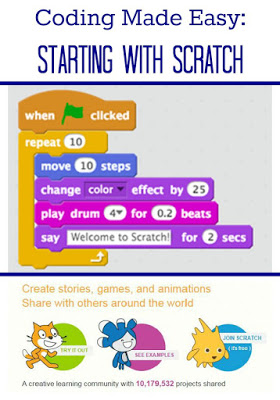
Discovering "Scratch" at Planet Smarty Pants.


Stock Market Basics for Kids at Pragmatic Mom.

The After School Linky is cohosted by
Relentlessly Fun, Deceptively Educational
We would love to have you link up your School-Age Post (Ages 5 and up) about your learning week after school including Crafts, Activities, Playtime and Adventures that you are doing to enrich your children's lives after their day at school, home school, or on the weekend!
When linking up, please take a moment to comment on at least one post linked up before yours and grab our after school button to include a link on your post or site! By linking up, you're giving permission for us to share on our After School Pinterest Board and feature an image on our After School Party in the upcoming weeks! 

Friday, July 31, 2015

Sea Turtle Sight Words Game {free printable}


We're still working on sight words with our 5-year-old. To make it a little more fun, I designed this BINGO-like game to play.


This beats the pants off of flash cards any day. Who wouldn't want to play a game with a turtle named Ollie, Netty, Timber, or Ziggy right?!?

The game I made contains eight turtle playing cards, a set of hatchling call cards with the sight words, and one blank turtle template for anyone who wants to customize the game for their child's learning level.

Download the 9-page PDF for free from Google Drive here.


To get the game ready, simply cut everything apart and grab some small items to use as game pieces. We used small flat glass baubles, but pennies or buttons would also work great. Each player will need a maximum of 13.

Place all the hatchling call cards face down in a big "go fish" pile. One player (or a parent) will select a card from this pile and read the word. 

Other players must scour their turtle card and place a game piece over the sight word if it's present. 


Play continues this way until all the sight words on one player's card have been covered; they're declared the winner!

Want a great book to extend the learning? We read The Green Sea Turtle by Isabel Muller. It taught my son all about the long journey of one sea turtle and its return to the beach where it was born to lay eggs. 

Wednesday, July 29, 2015

History of Flight Printable Board Game


One of the learning themes I planned for us this summer was flight. We've had a LOT of fun making gliders and airplanes and parachutes, but now it's time to put the science aside and focus on the history of aviation.

To do this we could (of course) read books, but I think learning history through a timeline game is WAY more fun.


This game was a labor of love. I hope your kids will enjoy it as much as mine have. Note: It's a lengthy game with lots of reading; I recommend playing with kids 8+. (While our almost-six-year old played along, he grew tired of the slow pace.)

How to Make the Game
Download the PDF of the game, milestones, and game pieces from Google Drive here.


This game would not have been possible were it not for the excellent record-keeping and timeline reporting by The American Institute of Aeronautics and Astronautics.

Print the game pieces and game board on heavyweight cardstock. (Print milestones on office paper.)

Assemble the game board with tape. Since your home printer doesn't print full-bleed (i.e. all the way to the edge of the paper), you'll have to trim the white edges.

Don't worry about cutting the milestones apart; it's easier to leave them as pages and clip together with a binder clip.

Cut apart the game pieces and fold each. Insert the folded end into medium-sized binder clips. (We used small clips and were constantly righting our fallen game pieces. Larger clips will be more stable.)

How to Play
Put all game pieces on the words "START." Player 1 rolls a die and moves their game piece the number of spaces rolled. Whatever number they land on on the board, they should read the event that corresponds. 


The card may provide additional instructions - Fly into the Future (i.e. move forward) a noted number of spaces, Go Back a certain number of spaces, or You're Grounded (i.e. stay put). The player must move forward or back after reading the event. 

It's up to you whether you then read the next event that the player eventually lands on or just move and don't read. (We played this way to speed up an already lengthy game; gauge your child[ren]'s attention span.)

The first player to the finish wins.

Read
We've read a bunch of great books that would be perfect to pair with this game. For a relatively quick picture book, I'd recommend Gail Gibbons' Flying. It provides an illustrated snapshot of the history of flight. The others were also our favorites.